ExtPress™ assessment
ExtPress™. Understand what happens when you exercise.
ExtPress™ is the clinic’s compartment pressure assessment within Professor Lee’s diagnosis pathway. Measuring the response to exercise helps connect the symptoms you feel with findings that guide your treatment.
Understand the compartment response
Direct information from the affected compartment
A needle or catheter records pressure within the muscle compartment around an exercise assessment. The team selects the legs and compartments to examine from your symptom pattern and clinical findings. Before you consent, the clinician explains the procedure, alternatives and risks, including bleeding, infection and nerve injury.
NHS: compartment syndrome · Vogels et al. (2022): clinical consensus on lower-leg CECS · Buerba et al. (2019): CECS management strategies
Know what to expect
A supported assessment, step by step
Your appointment team will explain:
The exercise chosen to reproduce your symptoms and when it will be stopped.
The legs and compartments being assessed.
When pressure measurements will be recorded.
How Professor Lee will interpret the readings alongside your symptoms.
Your preparation, medication instructions and aftercare.
How your findings will be reviewed and translated into a treatment plan.
Know what happens next
From test results to a treatment plan
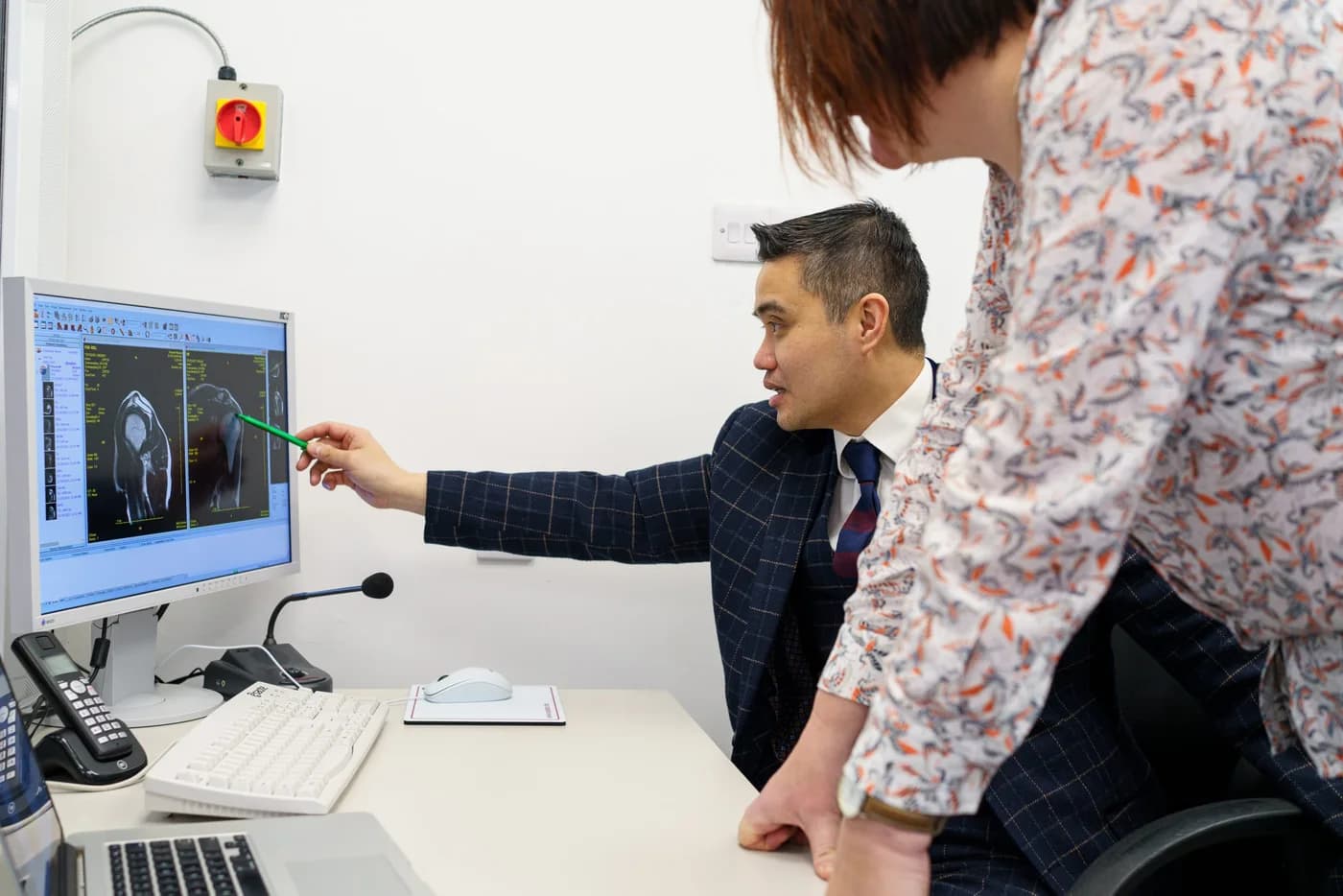
Your team will confirm the exercise, measurement schedule and preparation for your appointment. Afterwards, Professor Lee reviews the pressure findings with your clinical assessment and other investigations. You will discuss what the findings mean and which treatment offers the best fit for your symptoms and activity goals.
Discuss appointment arrangements →Purpose, preparation, location and cost.
Activity and measurement details confirmed by your team.
Aftercare, results and the next conversation.
Your appointment instructions confirm the exercise and measurement schedule.
Common questions
How does ExtPress™ guide treatment?
The test measures the response of the affected compartments to exercise. Professor Lee reviews the readings, symptom reproduction and other investigations together to explain the diagnosis and recommend treatment.
How should I prepare for a pressure assessment?
The team will provide your exercise, clothing, medication and aftercare instructions before the appointment. Bring previous investigations and let the team know about medicines, allergies and any change in symptoms.